
What Is a Solar Rack? A Comprehensive Guide from Chinese Solar Suppliers
Learn what a solar rack is, its types, key functions, and why Chinese suppliers' solutions stand out—from cost-effectiveness to durability. Essential insights for solar project developers worldwide.
tonybuy
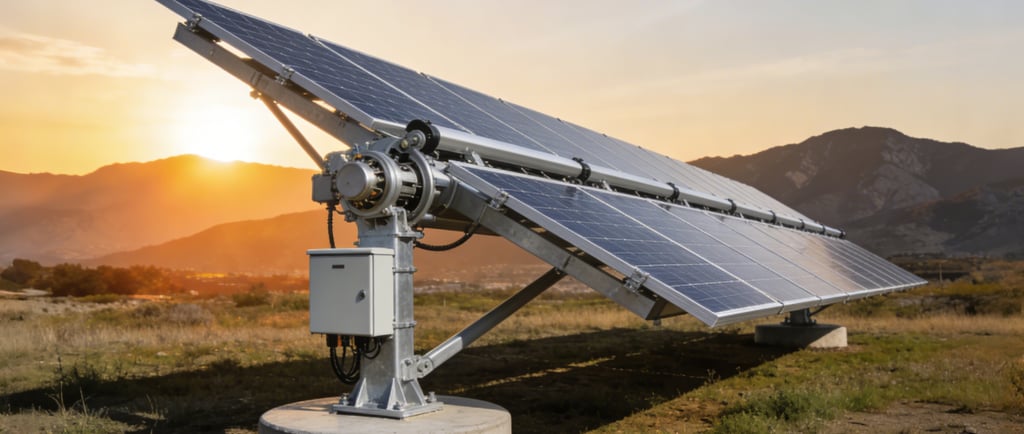
As the global demand for renewable energy surges, solar power has become a cornerstone of sustainable development, and solar racks play an indispensable role in ensuring the efficiency and safety of photovoltaic (PV) systems. For international buyers and project developers, understanding what a solar rack is—especially from the perspective of Chinese suppliers, who dominate the global PV supply chain—is crucial for making informed procurement decisions.
At its core, a solar rack (also known as a solar mounting system or PV racking) is a structural framework designed to secure solar panels in place on various surfaces, such as rooftops, ground, or water bodies. Its primary function is not just to hold panels steady but also to optimize their tilt angle for maximum sunlight exposure, which directly impacts the overall energy output of the PV system. Additionally, a high-quality solar rack must withstand extreme weather conditions, including strong winds, heavy snow, and corrosion, to ensure the long-term reliability of the entire solar installation.
Chinese suppliers classify solar racks into several types based on application scenarios, structures, and materials, catering to diverse project needs worldwide. By application, the most common types are rooftop, ground-mounted, and floating solar racks. Rooftop racks are further divided into ballasted systems (ideal for flat roofs without penetrating the waterproof layer) and penetrating systems (suitable for sloped roofs like tile or metal roofs). Ground-mounted racks, widely used in large-scale solar farms, include fixed-tilt, adjustable-tilt, and tracking systems—with single-axis or dual-axis trackers boosting energy generation by 15-30% compared to fixed models. Floating racks, a growing segment in China’s solar industry, are designed for water bodies like lakes and reservoirs, enabling "fish-solar complementary" projects that save land resources.
In terms of materials, Chinese suppliers primarily use three options: galvanized steel, aluminum alloy, and composite materials. Galvanized steel (especially zinc-magnesium-aluminum coated steel) is favored for large-scale ground projects due to its high strength, corrosion resistance, and cost-effectiveness—making it a top choice for projects in coastal or humid regions. Aluminum alloy racks, lightweight and easy to install, are perfect for rooftop installations where weight load is a concern. Composite materials, though less common, offer excellent stability for specific complex terrain projects.
What sets Chinese solar rack suppliers apart in the global market? First, a complete industrial chain advantage. Leading Chinese manufacturers, such as Jiangsu Guoqiang Xingsheng, integrate upstream raw material production, R&D, processing, and assembly, enabling strict quality control and cost reduction. Even when including shipping costs, Chinese racks remain competitively priced in regions like Southeast Asia and Africa, where local supply chains are underdeveloped.
Second, customization capability. Chinese suppliers can tailor rack designs to meet specific project requirements, such as adapting to complex terrain (mountains, deserts), complying with international standards (EUROCODE, IBC, AS/NZS), and matching different panel sizes. For example, Leon Solar’s ballasted rooftop racks can withstand wind speeds up to 55 m/s and snow loads of 1.4 kN/㎡, making them suitable for harsh climates.
Third, reliability and after-sales support. Most Chinese suppliers offer 10-year product warranties and 20-year service lives, backed by rigorous testing and certifications (CE, SGS, UL). They also provide technical support, including installation guidance and structural calculations, to help international clients avoid installation risks.
For buyers considering procuring solar racks from China, it’s important to communicate clearly about project conditions (location, climate, surface type) and quality requirements. Reputable Chinese suppliers will conduct a comprehensive needs assessment to recommend the most suitable rack type and material, ensuring optimal performance and cost-efficiency.
In conclusion, a solar rack is more than just a support structure—it’s a critical component that determines the safety, efficiency, and longevity of a PV system. Chinese suppliers, with their industrial chain advantages, customization capabilities, and competitive pricing, have become trusted partners for global solar projects. By understanding the basics of solar racks and leveraging Chinese suppliers’ strengths, project developers can accelerate the transition to clean energy while maximizing returns on investment.
Unit 10, Smithfield Road Industrial Hengshui
Hebei Province
Beijing
China
+86 18633908188
tony.buy@gmail.com